
How Print Technology Advancements Are Transforming Promotional Merchandise in 2026
Discover how the latest print technology advancements are changing branded merchandise for Australian businesses, events, and corporate teams.

Written by
Jasmine Al-Rashid
Industry Trends & Stats
The world of branded merchandise has never moved faster. What was once a straightforward choice between a screen print or an embroidered logo has evolved into a sophisticated landscape of decoration techniques, digital innovations, and sustainable processes that are genuinely reshaping how Australian organisations think about their promotional products. Whether you’re a Sydney corporate team planning your next conference, a Brisbane event organiser sourcing branded giveaways, or a Melbourne council looking for eco-conscious merchandise, print technology advancements for promotional merchandise are creating opportunities that simply didn’t exist a few years ago. Understanding these changes isn’t just interesting — it’s genuinely useful for making smarter purchasing decisions and getting more value from your branded merchandise budget.
Why Print Technology Matters More Than Ever for Branded Merchandise
For a long time, print and decoration technology in the promotional products industry evolved slowly. Screen printing dominated apparel. Pad printing handled hard goods. Embroidery was the go-to for premium workwear and caps. These methods remain important, and they’re not going anywhere — but alongside them, a wave of newer technologies has arrived that changes what’s possible, what’s affordable, and how quickly you can get branded products in your hands.
The shift matters for several practical reasons. First, print quality directly affects how your brand is perceived. A crisp, full-colour logo on a promotional tote bag makes a very different impression than a faded, single-colour print. Second, advances in technology have expanded the range of products that can be decorated effectively — items like curved drinkware, textured fabrics, and irregular surfaces that were once difficult to brand are now handled with precision. Third, newer print processes are increasingly aligned with sustainability goals, which is front of mind for many Australian organisations right now.
For businesses investing in promotional products for businesses, staying across these developments helps you brief your supplier more confidently and ask the right questions when comparing options.
Direct-to-Film (DTF) Printing: A Game Changer for Custom Apparel
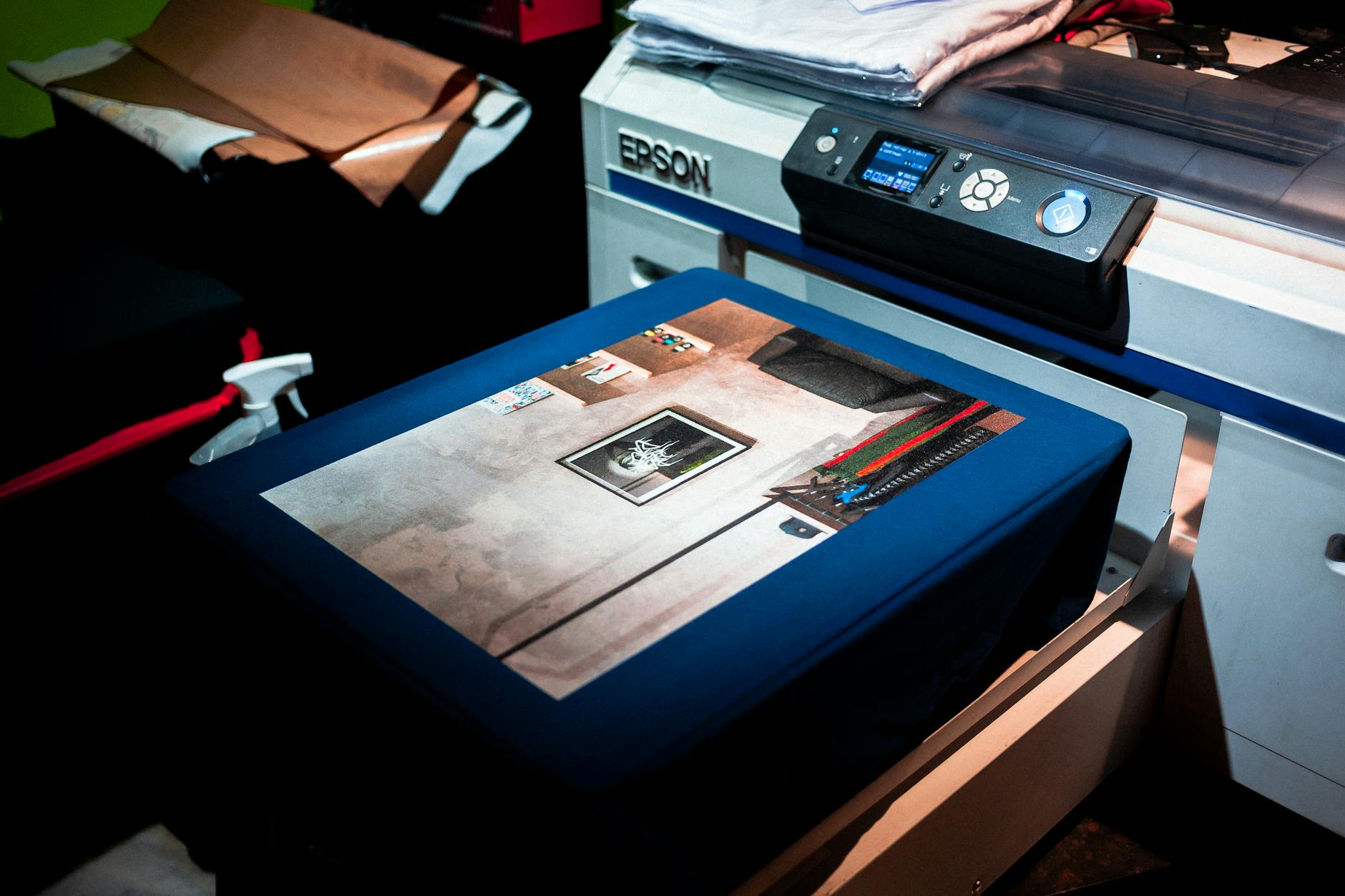
If there’s one technology that’s genuinely disrupted the custom apparel space in recent years, it’s Direct-to-Film (DTF) printing. Unlike traditional Direct-to-Garment (DTG) printing, which applies ink directly to fabric, DTF involves printing onto a special film, applying a hot-melt adhesive powder, and then heat-transferring the design onto the garment. The result is a vibrant, full-colour print with excellent wash durability that works on virtually any fabric type — cotton, polyester, nylon, and blended materials.
For promotional merchandise, this has some significant implications:
- No minimum order quantity (MOQ) barrier for full colour: DTF makes it economically viable to produce small runs of full-colour branded apparel, which was previously only practical with screen printing at higher volumes.
- Photographic and gradient-heavy designs: Logos with complex gradients, drop shadows, or photographic elements reproduce beautifully without the colour separation costs associated with screen printing.
- Faster turnaround: Because there’s no screen setup required, DTF jobs can move from artwork approval to production more quickly — important when you’re working against an event deadline.
This is particularly relevant for organisations considering top-rated custom t-shirts in Brisbane or anywhere else in Australia, where small-batch branding jobs are increasingly common for things like team uniforms, staff shirts, and event merchandise.
How DTF Compares to Screen Printing
Screen printing still holds advantages for very high-volume runs where per-unit cost needs to be minimised, and for designs with bold, solid colours that benefit from the tactile, slightly raised finish that screen ink produces. But for organisations ordering under 50 units, or whose brand guidelines include full-colour photographic elements, DTF has become a genuinely compelling alternative.
UV Printing: Unlocking New Product Categories
UV printing uses ultraviolet light to instantly cure (dry) ink as it’s applied, allowing it to bond to a wider range of hard surfaces than traditional printing methods. This technology has been around for some time in industrial applications, but refinements in flatbed UV printers over recent years have made it increasingly accessible for promotional merchandise.
What does this mean in practice? UV printing now makes it straightforward to apply detailed, full-colour branding to:
- Drinkware: Aluminium drink bottles, stainless steel keep cups, and glass mugs — products where achieving a wraparound print with precision previously required sublimation or labelling
- Hard promotional goods: USB drives, power banks, keyrings, and phone accessories
- Non-traditional surfaces: Wood, bamboo, acrylic, and even stone
For example, a Perth real estate agency gifting branded promotional keyrings to new property owners can now achieve multi-colour photographic printing on a range of keyring materials that simply wasn’t possible with pad printing. Similarly, organisations sourcing bamboo or recycled products as part of their sustainability commitments — explored in depth in our guide to sustainable promotional products — benefit from UV printing’s ability to work beautifully on natural, textured surfaces.
Sublimation Printing: Evolving Beyond Fabric
Sublimation has long been the gold standard for polyester fabric printing — think full-colour sports jerseys and custom branded flags. But advances in sublimation technology and the development of sublimation-ready coatings on hard goods have expanded its application significantly.
Ceramic mugs, metal drink bottles, coasters, phone cases, and even some timber products can now be sublimation-printed, provided they carry the appropriate coating or are manufactured from polyester-based materials. The key advantage of sublimation remains its ability to produce continuous-tone, photographic-quality images that are embedded into the substrate rather than sitting on top of it — meaning they won’t crack, peel, or fade under normal use.
For organisations focused on eco-friendly merchandise, it’s worth noting that sublimation inks are water-based and produce no volatile organic compounds (VOCs), aligning well with sustainable procurement goals. Our overview of sustainable promotional products for environmentally conscious brands covers how decoration choices contribute to the overall sustainability profile of your merchandise.
Sublimation and Promotional Product Longevity
One underappreciated benefit of modern sublimation printing is product longevity. Because the ink becomes part of the material rather than a surface coating, sublimation-decorated products tend to maintain their appearance far longer. For organisations thinking about years of service branded gifts for long-term employees or high-quality keepsakes, this matters.
Laser Engraving Technology: Precision at Scale
Laser engraving has evolved considerably with the introduction of fibre laser systems and CO2 lasers capable of working across a broader material range at faster speeds. Modern laser engravers can mark metal, glass, leather, wood, bamboo, acrylic, and coated surfaces with exceptional precision.
For promotional merchandise, this translates to premium branded products — think engraved stainless steel tumblers, personalised leather journals, or bamboo products with intricate logo work. Organisations sourcing recycled PET corporate gifts or bamboo items as part of sustainability initiatives will find that laser engraving sits naturally alongside eco-conscious material choices.
Laser engraving also supports mass personalisation — the ability to engrave unique names, numbers, or codes on individual items within a batch. This is increasingly popular for employee recognition programmes, conference delegate gifts, and awards.
Print Technology Advancements for Promotional Merchandise: Sustainability Connections
It would be incomplete to discuss print technology advancements for promotional merchandise without acknowledging their intersection with sustainability. Many of the technologies advancing in 2026 are doing so in ways that reduce environmental impact:
- Water-based and UV-curable inks are replacing solvent-based systems, reducing VOC emissions
- Digital printing methods (DTF, DTG, UV flatbed) eliminate the need for screens, films, and chemical developers associated with traditional pre-press
- Shorter run capabilities mean organisations can order what they actually need, reducing overstock and waste — a particularly relevant consideration for event organisers planning trade show giveaways and wanting to minimise leftover stock
For teams looking to align their merchandise strategy with broader environmental commitments, understanding which print technologies have lower footprints is part of the picture. Explore current trends in promotional products and how sustainability is shaping purchasing decisions across Australian industries.
Practical Implications for Ordering and Briefing Your Supplier
Understanding these technologies is one thing — knowing how to apply that knowledge when ordering branded merchandise is another. Here are some practical considerations:
Ask about decoration method suitability early: Before committing to a product, confirm which decoration methods are available and which is best suited to your artwork. A four-colour logo with gradients will reproduce very differently via screen print versus DTF versus UV print.
Factor in turnaround differences: Screen printing with multiple colours requires setup time (screens, colour registration). DTF and digital methods are generally faster. If you’re working to a tight deadline for a trade show or an R U OK? Day workplace wellbeing event, clarify lead times upfront.
Budget for quality: Newer technologies can sometimes carry a slight premium for small runs, but the quality and flexibility gains often justify the cost. For premium gifts — such as eco-friendly plant pots for housewarming gift promotions or branded garden tools for summer promotional campaigns — the right decoration method elevates the entire product.
Request samples where possible: With any newer print technology, ask your supplier for a physical sample or production proof before committing to a full run. This is particularly important for products with curved or textured surfaces.
Consider artwork preparation: Some technologies require specific file formats or colour profiles. Ensure your brand guidelines include vector artwork (AI or EPS files) and that PMS colour references are available to help your supplier match brand colours accurately.
This kind of informed approach is equally relevant whether you’re sourcing promotional windscreen sunshades for a car wash business, pet treat bags for a pet food brand, or setting up a trade show display and booth with fully branded merchandise.
Conclusion: Key Takeaways
Print technology advancements for promotional merchandise are creating genuine opportunities for Australian businesses and organisations to achieve higher quality, greater flexibility, and better alignment with sustainability goals. Here’s what to remember:
- DTF printing has lowered the barrier to full-colour custom apparel, making vibrant, durable decoration accessible for small and medium runs without the setup costs of traditional screen printing
- UV printing has expanded the range of brandable products, enabling high-quality decoration on drinkware, tech accessories, bamboo, and other non-traditional surfaces
- Sublimation continues to evolve, now applicable to a wider range of hard goods and offering excellent longevity — ideal for premium gifts and keepsakes
- Laser engraving is increasingly precise and fast, supporting personalisation at scale and pairing naturally with sustainable material choices
- Many of these newer technologies align with sustainability goals, using cleaner inks, eliminating chemical pre-press processes, and enabling smaller, more accurate order quantities
Staying informed about these developments means you can have more productive conversations with your supplier, make better product choices, and ultimately deliver branded merchandise that genuinely reflects the quality and values of your organisation.